

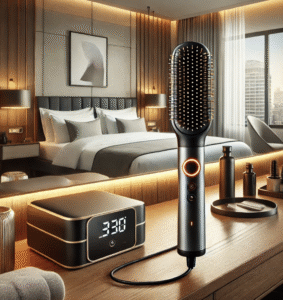
The thermal hair brush feels like a modern miracle—smooth roots, bouncy ends, salon-y shine from a single tool you can hold in one hand. But this “simple” beauty staple is the product of centuries of tinkering across cultures, materials, and technologies, from carved bone combs to ceramic-ion barrels and hot-air stylers. This article traces how we got from early heat-styling experiments to the brush you spin through your hair today, plus the pivotal moments, people, and innovations that shaped the category. 💁♀️
If you’ve ever done a round-brush blowout, you know the choreography: tension, heat, airflow, and direction. What looks effortless is actually the culmination of design decisions—handle ergonomics, bristle spacing, heat conduction, venting, weight balance—that took decades to standardize. The “thermal hair brush” isn’t one invention so much as a family of tools that solved the same problem (transfer controlled heat through hair while brushing) in ever smarter ways.
To understand its evolution, we’ll start long before electricity, visit the first heat-assisted tools, step into the 1960s salon that turned blowouts into a cultural phenomenon, and follow the tech race that led to today’s ceramic-ion, tourmaline, and hot-air systems. Along the way, we’ll see how media and market forces turned brushes into newsworthy products, from award lists to eye-popping acquisitions.
Ancient Grooming, Early Brushes, and the First Heat Experiments
Humanity’s first hair tools were more about cleanliness and detangling than styling. Early combs (think bone, ivory, wood) were found in archaeological sites dating back millennia; bristled brushes, which distribute oils and clean the scalp, evolved later as craftsmen paired handles with animal bristles. As metalworking, then industrial manufacturing, matured, brush makers added uniform pins, mixed bristle fields, and sturdier backings, transforming grooming from ritual to routine.
Heat came next—and it changed everything. By the late 19th century, inventors were experimenting with electrically warmed grooming implements. Period advertisements claimed “electric” combs and curlers could shape whiskers and hair quickly, foreshadowing a world where heat + tension + direction = style on demand. IEEE Spectrum
From Hot Combs to Hot Barrels: The Thermal Principle Emerges
While the hot comb is its own tradition (revered for its role in straightening tightly coiled textures), the broader breakthrough for brush-based styling was the realization that heated surfaces paired with brushing motions could both smooth and set shape. Early “thermal” surfaces were heavy and unforgiving metal. Over time, lighter alloys, better temperature control, and protective coatings allowed brushes to retain and radiate heat more evenly, mimicking the effect of a salon hood dryer but with speed and precision.
The rise of salon blow-drying in the mid-20th century catalyzed the brush’s evolution. Stylists developed round-brush techniques that, with a handheld dryer, could lift roots and create movement. Popular lore credits London salons in the early 1960s with cementing the modern blowout: use a round brush to create tension and direction while chasing strands with hot air, then “set” sections by leaving brushes in as they cool. That same decade birthed the cultural iconography of the polished, voluminous finish we still chase today. Square Magazine+1
The Blowout Era: Round Brushes, Vents, and the Power of Airflow
Once blow-drying became the norm, engineers and stylists collaborated (often indirectly) through feedback loops of salon practice and product design. Several key design choices defined the thermal hair brush as we know it:
-
Round barrels introduced wrap-around tension and all-direction curling potential.
-
Vented cores allowed air to pass through the barrel, speeding dry times and setting volume.
-
Mixed bristle fields (natural + nylon) balanced grip, shine, and glide.
-
Barrel coatings evolved from bare metal to ceramic and tourmaline, improving heat retention and evenness while reducing hotspots.
By the late 1990s and early 2000s, the market saw a flood of pro-influenced thermal brushes featuring ceramic-ion technology, designed to smooth the cuticle and reduce frizz while holding a consistent working temperature. Brands marketed “faster drying,” “less damage,” and “more shine,” claims now common across the category. Olivia Garden
Materials Science Levels Up: Ceramic, Tourmaline, and Ionic Claims
Thermal performance isn’t just about “hotter.” It’s about controlled heat and effective heat transfer. Ceramic coatings helped distribute heat across the barrel to avoid scorching individual strands. Tourmaline (a semi-precious crystalline boron silicate) gained popularity for its ability to generate negative ions when heated, which brands claim helps neutralize static and close the hair cuticle for a sleeker finish. Meanwhile, “ionic” language—once confined to luxury tools—filtered down to mainstream brushes and blow-dryers, turning science-ish terminology into everyday lexicon.
In parallel, handle design, weight distribution, and anti-fatigue ergonomics became differentiators, especially as at-home users embraced pro-style blowouts. The best thermal brushes today feel light but planted, with grips that reduce wrist strain and tips that stay cool during sectioning.
Enter the Hot-Air Brush: When the Dryer Moves into the Barrel
A major turning point came when manufacturers combined brush and dryer into one tool—hot air flowing through a vented barrel with fixed bristles. This shrank the learning curve (you could style one-handed) and invited legions of new users into the blowout game. The design also encouraged innovation in barrel shapes (oval for extra root lift), rotation (auto-rotating wands), and modularity (interchangeable heads).
Media recognition turned these devices into phenomena. Annual awards lists crowned hot-air and thermal brushes the “must-have” tools of the season, validating performance and pushing more R&D across speed, temperature control, and user safety. Allure
Market Signals: When Brushes Make Headlines
Brushes aren’t just tools; they’re a business story. Consider the recent acquisition of a major detangling-brush brand by a global consumer-goods company—proof that brush IP, distribution, and brand equity are valuable enough to command nine-figure deals. This isn’t strictly “thermal,” but it underscores how brush innovation (bristle geometry, flexible paddles, ergonomic shells) can reshape entire categories and catch the eye of big acquirers. BIC+1
Industry reports also track breakout growth in hair brush segments (including powered and electric brushes), fueled by at-home styling trends and iterative improvements in materials and motors. These market dynamics pressure thermal tools to keep innovating—better heat mapping, smarter airflow, safer plugs, and clearer temperature labeling. Fortune Business Insights+1
Safety and Standards: The Quiet Evolution
As the category matured, regulators and retailers emphasized safety: compliant plugs, insulation, fuse protection, and labeling. Occasional recalls—often for non-compliant electrical components—remind consumers and manufacturers that thermal convenience must never come at the expense of electrical safety. These episodes, while rare relative to market size, help raise the bar for the industry and influence design standards in subsequent product waves. The Sun
Technique Drives Design (and Vice Versa)
One reason thermal brushes keep evolving is that technique keeps evolving. Salon pros popularized the “brush set” method—rolling and parking round brushes to cool in place—driving demand for barrels that grip without snagging and tips that stay cool to the touch. Social media tutorials minted a generation of at-home blowout enthusiasts, which in turn favored lighter tools, intuitive handle geometry, and forgiving bristle patterns. As consumers demanded “salon results at home,” brands doubled down on features that lower the skill floor—rotating barrels, temperature governors, and modular systems that let beginners experiment with shape and tension before graduating to pro tricks. YouTube
Timeline at a Glance (Highlights)
-
Pre-industrial era: Combs and early brushes emerge for cleaning and detangling; materials include bone, ivory, wood, and later metals.
-
Late 1800s: Early electric grooming tools (including heated combs and curlers) appear, previewing heat-assisted styling. IEEE Spectrum
-
Early–mid 1900s: Salon blow-drying spreads; hot combs and heated tools diversify.
-
1960s: The modern blowout becomes a London salon signature; round-brush techniques for lift and polish go mainstream. Square Magazine
-
1990s–2000s: Ceramic, tourmaline, and ionic language become ubiquitous; pro-influenced round brushes and vented barrels dominate. Olivia Garden
-
2010s–2020s: Hot-air brushes and multi-head stylers explode in popularity; awards and viral tutorials normalize DIY blowouts. Allure+1
-
Today: Safety standards tighten; market consolidation and innovation cycles accelerate; thermal brushes continue blending ergonomics, materials science, and airflow engineering. The Sun+1
What Actually Makes a Great Thermal Hair Brush?
Heat retention and distribution: Ceramic (and ceramic-coated) barrels hold heat evenly; venting accelerates drying and setting.
Bristle architecture: Mixed fields (nylon for control, boar for shine) or flexible detangling tines reduce snagging while maintaining tension.
Ergonomics: Weight, balance, grip texture, and a cool-touch tip reduce fatigue and burns.
Airflow compatibility: Vented cores that align with dryer nozzles (or integrated hot-air designs) improve efficiency.
Temperature honesty: Clear labeling and realistic max temps protect hair health and build trust.
In short, the best brush is an interface between physics (heat + tension + time), anatomy (your hair type and density), and your learned habits. When those intersect, you get the glossy, buoyant result that made blowouts a global ritual.
Why This History Matters (Beyond Trivia)
Knowing the lineage of thermal brushes helps you shop smarter and style safer:
-
Materials aren’t marketing fluff. Ceramic, tourmaline, and ionic tech have practical effects on heat spread, static, and finish—especially on porous or color-treated hair.
-
Form follows technique. If you love rounded, bouncy ends, round barrels and hot-air brushes with oval heads make sense; for sleek roots, look for denser bristles and targeted airflow.
-
Safety is part of performance. Certified plugs, proper fusing, and reputable retail channels aren’t optional; they’re table stakes for tools that combine heat and electricity. The Sun
Conclusion
The thermal hair brush is a quiet triumph of user-centered engineering. From the first heat-assisted combs to pro-grade round barrels and plug-and-play hot-air stylers, each generation solved real styling problems—faster drying, smoother finishes, healthier hair, easier technique. The next frontier will likely blend smarter materials, gentler heat profiles, and even better ergonomics, continuing the same dance of technology and technique that began more than a century ago. The brush in your hand is more than a tool; it’s the latest chapter in a long, inventive story—one that turns heat, air, and bristles into confidence you can wear.