

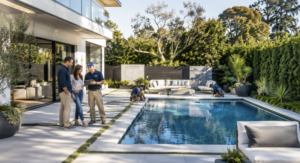
California homeowners have long treated their outdoor spaces as extensions of the home, but the backyard has taken on an even greater role in recent years. It has become a place for entertaining, relaxing, exercising, dining, and spending time with family. On the Peninsula, where mild weather and beautiful surroundings encourage outdoor living, homeowners are investing in swimming pools that feel more like private resorts than traditional backyard additions.
A modern pool project may include an integrated spa, outdoor kitchen, fire feature, lounge area, shade structure, landscape lighting, and carefully selected plants. The goal is no longer to place a pool in the middle of a lawn. The goal is to create a complete environment that reflects the architecture of the home and the lifestyle of the people living there.
This approach makes sense in a state known for its varied landscapes, architectural styles, and outdoor culture. As the overview of California explains, the state stretches across a remarkably diverse region. That diversity influences everything from plant selection and building materials to drainage planning and outdoor design. 🌴
The California Backyard Has Become Part of the Home
Home improvement once focused primarily on kitchens, bathrooms, flooring, and interior additions. Those projects remain important, but many California homeowners now place the backyard near the top of their renovation lists. A thoughtfully designed outdoor area can provide many of the same comforts found indoors while creating a stronger connection to the surrounding landscape.
The Peninsula’s climate makes outdoor living possible during much of the year. Homeowners can enjoy morning coffee beside the pool, host afternoon gatherings, or relax outdoors after sunset. Instead of reserving the backyard for occasional summer use, families are designing spaces that can become part of their daily routines.
This shift has changed the role of pool builders. Experienced contractors are increasingly involved in the larger outdoor plan rather than working on the pool as an isolated feature. They must consider how the pool connects to doors, patios, walkways, gardens, views, dining areas, and the natural movement of people around the property.
A successful project feels balanced from every angle. The pool should look attractive from inside the home, remain convenient to reach, and leave enough room for comfortable movement around the deck. When those details are addressed early, the finished backyard feels intentional rather than crowded.
Pool Design Is Moving Beyond the Water
The most memorable pool environments are built around more than the shape of the pool. Water may be the centerpiece, but the surrounding features create the atmosphere.
A shallow sun shelf can provide a comfortable place to sit in the water or set up a lounge chair. Wide entry steps can create a welcoming transition into the pool. An attached spa can become a year-round retreat, while a raised wall or subtle water feature can add movement and sound without overwhelming the yard.
Materials also influence the character of the space. Natural stone can give the backyard a relaxed, organic appearance, while large-format porcelain pavers can create a clean, contemporary finish. Smooth coping, understated tile, and coordinated hardscaping help connect the pool to the home.
Many homeowners are choosing quieter visual details instead of filling the backyard with competing features. A simple geometric pool surrounded by refined landscaping may feel more luxurious than a complicated design. Good design often comes from restraint, proportion, and careful placement rather than the number of additions included.
Peninsula Properties Require Site-Specific Planning
The Peninsula includes compact residential lots, hillside properties, established neighborhoods, and homes with mature trees or significant elevation changes. These conditions can make pool construction more complex than it initially appears.
Homeowners working with Swimming Pool Contractors Peninsula Area benefit from a design process that considers the entire property before construction begins. Access for equipment, soil conditions, grading, drainage, utility locations, privacy, neighboring properties, and local permit requirements may all influence the final plan.
A hillside property may require retaining structures or specialized engineering. A narrow lot may call for a long, streamlined pool that preserves room for seating. A yard with mature landscaping may need a design that protects important trees while avoiding root conflicts. Even the direction of the sun can affect where lounge areas, shade structures, and planting beds should be placed.
These practical considerations are not separate from luxury. They are part of it. A beautiful backyard that drains poorly, lacks privacy, or becomes difficult to navigate will quickly lose its appeal. Careful planning allows the finished space to look effortless because the complicated decisions were handled before excavation started.
Energy Efficiency Has Become Part of Luxury
California home improvement news frequently highlights energy efficiency, conservation, and long-term operating costs. These priorities are also shaping pool construction.
Modern pool equipment can be selected and programmed to operate more efficiently than older systems. Variable-speed pumps, automation controls, efficient filtration, and thoughtfully scheduled circulation can help homeowners manage ongoing energy use. Automated systems may also allow owners to control pumps, lighting, heating, water features, and spa settings from a phone or central control panel.
The California Energy Commission’s energy-efficiency resources reflect the state’s continuing focus on improving building performance. California’s updated energy standards took effect on January 1, 2026, reinforcing efficiency as an important consideration in new construction, additions, and alterations.
Pool efficiency also involves water management. The U.S. Environmental Protection Agency’s pool water-efficiency guidance explains that pools can lose water through evaporation, cleaning, leaks, and splashing. Covers, targeted maintenance, efficient equipment, and sensible operation can reduce unnecessary water and energy use.
Luxury is increasingly measured by how smoothly a property functions. Quiet equipment, reliable automation, consistent water quality, and manageable utility costs can add more everyday value than an elaborate feature that is expensive or difficult to maintain.
Water-Wise Landscaping Completes the Retreat
A swimming pool surrounded by bare paving rarely feels like a true retreat. Plants soften hard surfaces, provide privacy, frame views, and help the new construction blend with the rest of the property.
California landscapes require thoughtful plant selection. The most successful poolside gardens are chosen for appearance, climate suitability, maintenance needs, root behavior, and the amount of debris they may drop into the water. Plants positioned near the pool should contribute to the atmosphere without creating constant cleaning problems.
The California Department of Water Resources reports that approximately 40 percent of residential water use in California occurs outdoors. Its water-efficient landscape guidance emphasizes climate-adapted plants, improved soil conditions, efficient irrigation, and watering schedules that respond to local conditions.
These practices can be incorporated without sacrificing beauty. Ornamental grasses, sculptural succulents, native plants, evergreen screening, flowering perennials, and carefully placed trees can create a layered landscape with color and movement. Drip irrigation and properly designed planting zones can direct water where it is needed instead of treating every part of the yard the same.
Landscape lighting adds another layer after sunset. Soft illumination along paths, trees, walls, and planting beds can make the yard feel warm and usable without turning it into an overly bright commercial space. Underwater lighting can highlight the pool while nearby fixtures define the surrounding outdoor rooms.
Safety and Code Compliance Influence Good Design
Safety should be incorporated into the original design rather than added after construction. Barriers, gates, alarms, covers, visibility, deck surfaces, and access points all need to work together.
The California Building Standards Commission provides access to the state’s building standards, including requirements that affect swimming pools, spas, and residential construction. California standards address pool safety and establish requirements that local jurisdictions apply through the permitting and inspection process.
Slip-resistant decking can improve safety while complementing the design. Clear sightlines allow adults to see the pool from important areas of the house and yard. Gates and protective features can be integrated with fencing, walls, and landscaping so they feel like part of the overall plan.
Professional planning also includes appropriate depths, safe transitions, equipment placement, electrical work, and drainage. These details may not receive the same attention as tile or landscaping, but they determine whether the backyard remains comfortable and dependable over time.
Fire-Smart Design Is Becoming More Important
Wildfire awareness has become part of home improvement planning throughout California. Even properties located away from heavily wooded areas may benefit from thoughtful material and landscape choices.
The CAL FIRE defensible-space program describes defensible space as a buffer between a structure and the surrounding area. Properly maintained space can slow wildfire spread, reduce exposure to embers and heat, and give firefighters a safer place to protect a home.
In a pool-centered backyard, fire-smart planning may include noncombustible hardscaping, carefully positioned plants, maintained vegetation, appropriate spacing, and reduced accumulation of dry organic material near structures. Gravel, stone, concrete, and pavers can contribute to both the design and the property’s resilience.
This does not require creating a barren landscape. Fire-smart outdoor design can still feel green, comfortable, and welcoming. The key is coordinating plant choices and maintenance expectations with the site’s location and risk conditions.
The Contractor Relationship Protects the Investment
A custom pool and landscape transformation involves many decisions, trades, and stages of construction. Clear communication is one of the most important parts of the process.
California homeowners should verify licensing, review the proposed scope, understand the payment schedule, and make sure the contract identifies materials, equipment, responsibilities, and project expectations. The Contractors State License Board’s pool-construction guidance states that qualifying pool construction and repair work must be performed by a properly licensed contractor. CSLB also explains that swimming pool contracts should include plans and scale drawings showing the pool’s shape, dimensions, construction, and equipment specifications.
Detailed planning helps homeowners compare proposals accurately. Two estimates may appear similar at first, but they may include different equipment, finishes, engineering allowances, landscape work, drainage solutions, or warranty coverage.
Written change orders are equally important when the project evolves. Adjustments often happen during construction, especially on complex properties, but those changes should be documented so everyone understands the revised cost and scope.
Trust grows when the contractor communicates consistently, explains the work, and addresses concerns before they become larger problems. A strong working relationship helps turn a complicated construction project into a more organized and positive experience.
Responsible Construction Adds Long-Term Value
Outdoor renovations can produce a significant amount of soil, concrete, packaging, vegetation, and construction debris. A responsible project plan should include proper handling of those materials.
CalRecycle’s construction and demolition guidance notes that common project materials such as concrete, masonry, lumber, metal, pipes, cardboard, and green waste may be suitable for recycling or reuse. Diverting usable materials can conserve resources and may sometimes be more economical than disposal.
Durability is another part of responsible construction. Materials exposed to sunlight, moisture, chemicals, temperature changes, and regular foot traffic need to be selected for the conditions around a pool. Attractive materials that deteriorate quickly can create future repair costs and disrupt the appearance of the entire backyard.
A well-built outdoor environment should age gracefully. Good drainage, quality installation, dependable equipment, suitable plants, and durable finishes allow homeowners to spend more time enjoying the space and less time correcting avoidable problems.
Conclusion
Swimming pool contractors in the Peninsula Area are helping redefine what California home improvement looks like. The modern backyard is no longer an overlooked patch of lawn with a pool added in the middle. It is a carefully planned living environment that can include water, landscaping, dining, recreation, privacy, and year-round comfort.
The strongest projects begin with an understanding of the property and the homeowner’s lifestyle. They account for local conditions, code requirements, safety, efficiency, water conservation, materials, maintenance, and long-term use. Every part of the design contributes to the final experience.
A backyard becomes a luxury retreat when it feels natural to use, easy to maintain, and connected to the home. With thoughtful planning and experienced construction, Peninsula homeowners can create outdoor spaces that provide far more than visual appeal. They can create places where everyday life feels a little more relaxed, gatherings feel more memorable, and home feels like the best destination in California.