

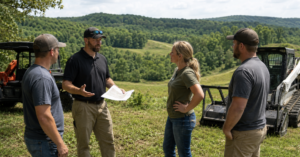
For business owners in Millwood, WV, land is more than just property. It can be an asset, a liability, a first impression, a safety concern, and a long-term investment all at the same time. Whether a company owns commercial acreage, industrial land, undeveloped property, roadside frontage, utility access areas, agricultural space, or future expansion sites, keeping that land under control matters.
Large properties can quickly become difficult to manage when brush, invasive growth, tall weeds, saplings, and overgrown vegetation begin spreading across the acreage. What starts as a small maintenance issue can turn into blocked access roads, reduced visibility, drainage problems, pest concerns, fire hazards, and a property that looks neglected from the outside.
For local companies trying to maintain a professional image, protect employees, support operations, and preserve property value, vegetation management should not be treated as an afterthought. It should be part of a smart business maintenance plan.
Millwood and the surrounding region sit within West Virginia’s broader business landscape, where land, logistics, natural resources, infrastructure, and local economic development all play important roles. Business owners who follow resources such as the West Virginia Department of Commerce understand that property readiness, safe sites, and responsible land use can all contribute to stronger commercial growth across the state.
Why Large Acreage Vegetation Management Matters for Business Properties
Business land has a job to do. Even when acreage is not being actively used every day, it still affects the way a company operates and the way people perceive the business. Overgrown commercial property can send the wrong message to customers, vendors, inspectors, neighbors, and potential investors.
A neglected property may look inactive, unsafe, or poorly maintained. For companies that rely on trucks, equipment, outdoor storage, employee parking, public access, or future development space, uncontrolled vegetation can create real operational problems. Brush can block sightlines, cover signage, reduce usable space, hide damage, and make it harder to inspect fencing, drainage areas, utilities, and access points.
Professional vegetation management helps restore control. It clears unwanted growth, improves access, reduces hazards, and gives the property a cleaner, more organized appearance. For business owners, that can mean fewer headaches, better site function, and a more confident presentation of the property.
This is especially important in areas where commercial land may be tied to future growth. The West Virginia Division of Economic Development regularly highlights business expansion, investment, and economic activity throughout the state. When businesses prepare and maintain their land properly, they are better positioned to respond when new opportunities arise.
The Business Risks of Letting Large Acreage Become Overgrown
Overgrown acreage is more than an appearance issue. It can create costly risks that business owners may not notice until the problem becomes serious.
Tall vegetation can limit visibility for drivers, especially near entrances, access roads, loading areas, and roadside frontage. Brush can grow around fences and gates, making them harder to inspect or repair. Dense growth can also conceal illegal dumping, trespassing, abandoned materials, erosion, animal activity, or storm damage.
For properties with equipment, buildings, storage areas, or utility infrastructure, vegetation can interfere with routine inspections. If crews cannot easily access parts of the site, small problems can go unnoticed. Drainage issues may worsen. Tree seedlings can grow near structures. Vines and brush can creep into areas where they do not belong.
There is also a reputation factor. A business property that looks abandoned or unmanaged can affect how the public sees the company. Even if the business itself is strong, the land surrounding it can create a different impression. In competitive markets, appearance and trust matter.
Business owners who keep up with West Virginia business news understand that companies are often judged by their readiness, professionalism, and ability to maintain strong operations. Clean, well-managed acreage supports that image.
How Vegetation Management Supports Safety and Accessibility
Safety is one of the strongest reasons for business owners to invest in large acreage vegetation management. A clean, accessible property is easier to monitor, easier to navigate, and easier to maintain.
When vegetation becomes too dense, it can create blind spots and hidden areas. Employees, contractors, and visitors may have trouble moving safely across the site. Emergency access can also become more difficult if roads, paths, gates, or utility corridors are blocked by brush or low-hanging limbs.
For businesses with large acreage, access matters. Maintenance crews need to reach the areas they are responsible for. Inspectors may need to review certain parts of the property. Utility workers may need a clear path. Owners may need to evaluate land for expansion, sale, leasing, drainage improvements, or construction planning.
Professional vegetation management can open up the property and make it usable again. It can create clear routes, restore visibility, and reduce the chances of hazards being hidden under thick growth. It also gives business owners a clearer picture of the condition of their land.
The West Virginia Secretary of State’s news page regularly reports on business activity and registrations across the state, showing that commercial growth and business formation remain active topics in West Virginia. For companies that want to grow responsibly, managing physical property is part of building a stronger business foundation.
Why Large Acreage Requires a Different Approach Than Regular Lawn Care
Large acreage maintenance is not the same as mowing a small commercial lawn. Bigger properties often require heavier equipment, a better plan, and an understanding of how different areas of the land should be handled.
Some sections may need brush cutting. Others may need selective clearing. Some areas may need regular mowing schedules, while others may only require seasonal maintenance. Sloped land, wet areas, wooded edges, drainage zones, fence lines, roadside frontage, and utility access points may all need different treatment.
A basic mowing crew may not be equipped to handle dense brush, thick saplings, uneven terrain, or large-scale clearing. That is why business owners should look for a company that understands acreage work, not just standard lawn care.
The goal is not always to strip the land bare. Good vegetation management is about control, safety, access, and long-term usability. It should improve the property without creating unnecessary damage. A thoughtful plan can help preserve the value of the land while making it cleaner and easier to manage.
For businesses researching support options, resources like the West Virginia Small Business Development Center show how important planning, growth, and operational decision-making can be for companies across the state. Land maintenance should be viewed through that same business-minded lens.
The Role of Property Appearance in Business Trust
Trust is not built by one thing alone. It comes from many signals working together. A clean website, a professional staff, reliable service, good communication, and a well-maintained property all contribute to how people judge a business.
For companies with visible acreage, property appearance can influence trust before anyone ever walks through the door. Customers may see the land while driving by. Vendors may notice the site when making deliveries. Contractors may judge the readiness of the property before starting work. Neighboring businesses may form opinions based on how the property is maintained.
A clean, controlled property communicates that the business pays attention. It shows that the owner takes the site seriously. It also helps reduce the feeling of neglect that can come with overgrown land.
This matters even more for business owners who may eventually sell, lease, expand, or develop part of the acreage. A property that has been maintained consistently is easier to evaluate and more appealing to potential partners or buyers.
Statewide business organizations such as the West Virginia Chamber of Commerce focus on growth, investment, jobs, and business prosperity. While vegetation management may seem like a small part of that picture, property readiness and professional presentation support the same larger goal: helping businesses operate with confidence.
Vegetation Management and Long-Term Property Value
Large acreage is a valuable asset when it is maintained properly. When it is ignored, it can become more expensive to reclaim later. The longer vegetation is allowed to grow unchecked, the more difficult the cleanup can become.
Small saplings can turn into larger trees. Brush can thicken. Access paths can disappear. Drainage problems can become harder to identify. Fence lines can become buried. Debris can be hidden. The property can slowly lose usable space.
Regular vegetation management helps prevent that decline. It keeps the land manageable year after year, rather than forcing the owner to deal with a major cleanup after several seasons of neglect. This can save money over time and help preserve the usefulness of the acreage.
For businesses in Millwood, this can be especially valuable if the land may be used for future building, parking, outdoor operations, equipment access, storage expansion, or site improvements. Controlled land gives owners more options.
The Economy of West Virginia has long been shaped by industries connected to land, resources, transportation, energy, manufacturing, and development. For local business owners, responsible land management continues to be a practical part of participating in that broader economic environment.
When Millwood WV Business Owners Should Schedule Vegetation Management
Business owners should consider scheduling vegetation management before the property becomes difficult to access. Waiting until the land is completely overgrown can make the work harder and more expensive.
A good time to evaluate the property is when visibility starts to drop, access roads begin narrowing, weeds or brush reach fence lines, drainage areas become harder to inspect, or employees and contractors have trouble moving through certain areas. Seasonal growth can happen quickly, especially when a property is large and not walked regularly.
A scheduled maintenance plan can help prevent these issues. Some businesses may need vegetation management once or twice a year. Others may need more frequent service depending on property use, terrain, growth rate, visibility needs, and business operations.
Business owners looking for reliable local support can learn more about Large Acreage Vegetation Management Millwood WV and how professional land clearing and maintenance can help keep commercial acreage safer, cleaner, and easier to manage.
Choosing the Right Vegetation Management Partner
Choosing the right company matters. Large acreage work requires more than showing up with basic equipment. Business owners should look for a provider that understands commercial properties, acreage challenges, safety concerns, and long-term land maintenance.
The right vegetation management partner should be able to assess the property, understand the owner’s goals, and recommend a practical approach. Some properties may need aggressive clearing in certain areas and lighter maintenance in others. Some may require improved access around gates, roads, buildings, or utility zones. Others may need regular upkeep to keep the property looking professional throughout the year.
Communication is also important. A business owner should know what work is being done, what areas are being addressed, and how the property will look after the job is complete. The best results come from a clear plan, dependable service, and a focus on making the land more useful.
Business publications like West Virginia Executive highlight the importance of leadership, growth, and development across the Mountain State. For local business owners, smart property maintenance is one of the practical ways to support those same values on the ground.
Conclusion
Large acreage vegetation management is an important part of protecting business property in Millwood, WV. It supports safety, access, appearance, long-term value, and operational readiness. For business owners, unmanaged land can quickly become a source of risk, while well-maintained acreage can become a stronger asset.
Overgrown vegetation can block visibility, hide hazards, limit access, damage first impressions, and make future improvements more difficult. Professional vegetation management helps restore control and gives business owners a cleaner, safer, and more usable property.
For Millwood WV businesses with commercial acreage, industrial land, undeveloped property, roadside frontage, or future expansion space, the right maintenance plan can make a noticeable difference. It protects the land, supports the business image, and helps keep the property ready for whatever comes next.
A well-managed property tells customers, employees, vendors, neighbors, and investors that the business pays attention to the details. In a state where land, business growth, and economic development are closely connected, that kind of care matters.