

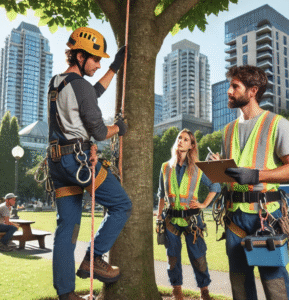
Trees are one of nature’s most valuable resources—they clean our air, provide shade and shelter, add property value, and support entire ecosystems. However, the health and safety of trees, especially in urban and suburban areas, don’t maintain themselves. This is where certified arborists come in. Often referred to as tree surgeons, certified arborists are highly trained professionals responsible for the cultivation, management, and study of individual trees, shrubs, vines, and other perennial woody plants. But their work goes far beyond trimming branches or removing stumps. Their expertise helps maintain healthy environments, prevents property damage, ensures public safety, and preserves the natural beauty of communities.
In this article, we’ll dive deep into the work of certified arborists, the training and certifications they must obtain, the services they offer, and why their role is so critical in today’s world. If you’ve ever wondered whether you need an arborist for your home, business, or municipality—or simply want to better understand what these green-thumbed professionals do—you’re in the right place. 🌱
What Is a Certified Arborist?
A certified arborist is a tree care professional who has earned certification through the International Society of Arboriculture (ISA). This certification requires passing a comprehensive exam covering all aspects of arboriculture, including tree biology, diagnosis, maintenance practices, and safety. To maintain their credentials, certified arborists must also engage in continuing education and uphold the ISA’s code of ethics.
Unlike general landscapers or gardeners, certified arborists have specialized training in the science of tree care. Their expertise extends to understanding soil science, pest and disease management, pruning techniques, and advanced risk assessments. They are the go-to experts when trees need more than just routine trimming—they diagnose issues, develop care plans, and provide treatments to help trees thrive for generations.
Services Offered by Certified Arborists 🌿
Certified arborists offer a wide range of services for homeowners, businesses, cities, and public institutions. These include:
1. Tree Health Assessments
Tree health assessments are a core service provided by certified arborists. Using their deep understanding of tree biology and pathology, arborists inspect trees for signs of disease, pest infestation, structural instability, nutrient deficiencies, and environmental stress. They often use tools like resistographs or sonic tomography to detect internal decay without damaging the tree.
By catching issues early, arborists can recommend treatments that prevent costly removals and restore tree vitality. This proactive care helps protect both people and property from falling limbs or diseased trees that can cause harm or spread problems.
2. Tree Pruning and Trimming
While many people consider pruning to be a cosmetic task, it’s actually vital to a tree’s long-term health. Certified arborists prune trees to remove dead or diseased branches, improve structure, enhance sunlight penetration, and reduce the risk of storm damage. They follow best practices such as ANSI A300 pruning standards to ensure cuts are clean and beneficial.
Improper pruning can permanently damage or kill a tree. That’s why it’s crucial to have a certified arborist handle this task rather than a general handyman or landscaper.
3. Tree Planting and Selection 🌱
Planting a tree may seem simple, but the wrong species in the wrong location can lead to years of problems. Certified arborists guide property owners in selecting species that will thrive in the local soil, climate, and space. They also ensure trees are planted with proper spacing, depth, and protection to encourage strong root development and healthy growth.
According to the U.S. Forest Service, healthy urban forests reduce energy use, improve air quality, and enhance the quality of life. Arborists play a key role in helping these forests take root.
4. Tree Removal and Stump Grinding
Sometimes, removing a tree is necessary due to safety risks, disease, or land development. Certified arborists are trained to assess whether removal is the best or only option and can perform the job safely. Tree removal can be dangerous work—especially when trees are large, leaning, or near power lines—and should only be handled by trained professionals with the right equipment.
Once a tree is removed, arborists often recommend stump grinding to prevent decay, tripping hazards, or the regrowth of unwanted shoots.
5. Emergency Tree Services 🌪️
Storms, lightning, high winds, and even vehicle impacts can cause trees to fall or become hazardous. Certified arborists offer emergency services to remove or stabilize trees after such events, protecting property and restoring safety. Because they understand tree structure and biology, they can assess whether a tree can be saved or must be removed.
In emergency scenarios, rapid response can make a big difference—and certified arborists are trained to act quickly and safely under pressure.
6. Pest and Disease Management 🐛
Certified arborists diagnose and treat a wide array of tree pests and diseases, from emerald ash borer infestations to oak wilt and root rot. They use integrated pest management (IPM) strategies, which may include biological controls, chemical applications, pruning, and improved soil conditions.
Their goal is to treat problems with minimal impact on the environment. Arborists are trained in the responsible use of pesticides and know when alternative methods are more effective or sustainable.
7. Soil and Root Care
A tree’s health begins underground. Certified arborists often test soil for pH, compaction, drainage, and nutrient content. If a tree is struggling, the issue is often invisible to the naked eye. Remedies might include deep root fertilization, aeration, or amending the soil with organic matter.
Healthy soil means stronger roots, better water absorption, and greater resistance to disease.
8. Construction Consultation
Construction near trees can be devastating if not managed properly. Arborists consult with builders and property owners to ensure trees are protected during excavation, grading, or installation of utilities. This may involve root mapping, protective barriers, and recommendations for machinery routes.
Tree preservation plans are especially important for municipalities and developers who want to balance growth with sustainability.
9. Tree Risk Assessment & Reports
Arborists are qualified to provide tree risk assessments—formal evaluations that rate the likelihood and consequences of tree failure. These reports are often required for insurance purposes, legal claims, or city permits. Using tools and expertise, arborists document tree conditions and make recommendations for mitigation.
Having an arborist’s written report can also help property owners defend against claims of negligence or damage due to falling limbs.
Why Certification Matters 🎓
Not all tree service providers are created equal. Hiring someone with an ISA certification ensures they’ve demonstrated a high level of knowledge and professionalism. Certified arborists commit to:
-
Upholding ethical standards of care and integrity.
-
Staying current on the latest science and industry practices.
-
Adhering to safety protocols that protect both workers and the public.
-
Continuing education to maintain certification and improve their skills.
Homeowners, businesses, and cities that hire ISA-certified arborists benefit from higher-quality work, better outcomes for their trees, and lower risks of damage or liability.
For more information on the certification process or to verify an arborist’s credentials, visit the ISA’s official website.
The Economic and Environmental Benefits of Arborists 💰🌎
Hiring a certified arborist is not just an expense—it’s an investment. Well-maintained trees can increase property values by as much as 20%, according to Arbor Day Foundation research. In cities, tree-lined streets attract shoppers, improve traffic safety, and reduce urban heat islands.
Healthy trees also:
-
Improve air and water quality
-
Provide habitat for birds and wildlife
-
Reduce stress and improve mental health
-
Lower energy bills through shade and wind buffering
-
Capture stormwater runoff and reduce soil erosion
These wide-ranging benefits have made urban forestry a recognized part of city planning, and certified arborists are often contracted by governments, universities, and developers to guide green initiatives.
When Should You Call a Certified Arborist? 📞
Here are some situations where hiring a certified arborist is the smart move:
-
You notice mushrooms or fungus growing on your tree trunk or roots.
-
A tree has suffered storm damage or is leaning.
-
You want to plant new trees strategically for shade or privacy.
-
A tree is shedding limbs, losing leaves out of season, or showing other signs of disease.
-
You’re building a home or office and want to preserve existing trees.
-
You’re concerned about safety or liability from an old or overgrown tree.
-
You need help with pruning, fertilization, or routine tree care.
Whether you’re a homeowner wanting to protect a beloved oak or a business aiming to beautify your campus, an arborist can provide the scientific expertise to help your trees flourish.
Conclusion: Trust the Tree Experts 🌳❤️
Certified arborists are the unsung heroes of our neighborhoods, parks, and urban forests. Their knowledge ensures that trees live longer, grow stronger, and contribute meaningfully to the ecosystems around them. From health assessments to emergency removals, their work is rooted in science, safety, and stewardship. 🌿
By investing in the services of a certified arborist, you’re not just protecting a tree—you’re protecting property values, public safety, and the planet.
So the next time you walk down a shady path, admire a flowering dogwood, or sit beneath a swaying pine—remember, there’s probably an arborist to thank for that.
To find a certified arborist near you or to learn more about arboriculture, visit the International Society of Arboriculture. 🌐