

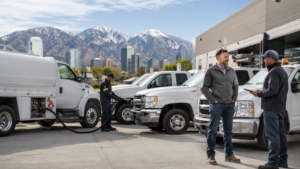
Salt Lake City has always been a place where business moves fast. From construction crews and trucking companies to warehouses, contractors, delivery fleets, farms, municipalities, and service companies, the local economy depends on equipment, vehicles, schedules, and reliability. When those pieces are working together, everything runs smoothly. When one piece breaks down, delays can become expensive very quickly.
One of the biggest operational headaches for many companies is fuel. It may not seem exciting, but diesel is one of the resources that keeps business moving in Salt Lake City and throughout Utah. When a fleet has to stop for fuel, when equipment sits idle, or when a crew loses time because someone has to leave the job site to fill tanks, productivity suffers.
That is why more local businesses are rethinking the way they manage fuel. Instead of sending drivers, operators, or employees to fuel stations, they are bringing the fuel directly to their vehicles, equipment, and job sites. For companies preparing for seasonal demand, construction deadlines, emergency work, winter conditions, tourism traffic, or busy delivery schedules, Diesel Delivery Salt Lake City is becoming a smarter and more practical business decision.
Salt Lake City Businesses Are Operating in a Fast-Growing Market
Salt Lake City is not a sleepy market. It is a major business center for Utah and the Mountain West, with industries that depend heavily on transportation, construction, logistics, energy, tourism, warehousing, and service-based operations. The city’s role as a regional hub is one reason companies are always looking for ways to reduce downtime and increase efficiency.
Anyone paying attention to Salt Lake City can see how important location is to the local economy. The city connects businesses to major highways, regional distribution networks, industrial areas, job sites, airports, commercial corridors, and growing communities along the Wasatch Front. That means companies in and around Salt Lake City often work under pressure. They have customers waiting, crews scheduled, deliveries to make, and jobs that cannot afford unnecessary delays.
Fuel access plays a major role in that pressure. A business may have the right trucks, the right employees, and the right contracts, but if equipment is not fueled and ready, the day starts behind schedule. Diesel delivery helps remove that bottleneck by making fuel part of the company’s workflow instead of a daily interruption.
The Hidden Cost of Fuel Runs
Many business owners think of fuel in terms of price per gallon, but that is only part of the cost. The real expense often comes from the time lost getting fuel. A truck may only be gone for 20 or 30 minutes, but multiply that by several vehicles, several employees, and several days per week. Suddenly, fuel runs become hours of paid labor that produce no revenue.
There is also the issue of vehicle wear, route disruption, driver availability, and job-site delays. If a crew member leaves a site to refuel equipment, that can interrupt the entire team. If a delivery driver starts the morning by waiting at a fuel station, that can push back every stop on the route. If heavy equipment runs low in the middle of a project, productivity drops immediately.
Diesel delivery gives businesses a way to control that time. Instead of sending people away from the work, fuel arrives where the work is already happening. Trucks can be fueled overnight, early in the morning, during scheduled downtime, or directly at the job site. That creates a more predictable operation, which is exactly what many Salt Lake City businesses need before the next big rush.
Why Timing Matters Before Busy Seasons Hit
Salt Lake City businesses face different types of demand throughout the year. Construction companies may deal with tight building schedules. Snow removal contractors need equipment ready when winter weather arrives. Delivery fleets may see spikes around holidays. Tourism-related businesses may prepare for increased travel seasons. Industrial and warehouse operations may need reliable fuel access when shipping volume increases.
The Salt Lake Chamber describes itself as a voice of business and an organization focused on supporting business success and community prosperity. That kind of business environment depends on preparation. Companies that wait until the rush begins often end up reacting to problems instead of preventing them.
Fuel planning is part of that preparation. A company that sets up diesel delivery before peak demand is in a better position to keep trucks moving, equipment running, and employees focused on revenue-producing work. Instead of scrambling when every minute matters, the business already has a system in place.
That is one of the biggest reasons diesel delivery is gaining attention. It is not only about convenience. It is about readiness.
Diesel Delivery Helps Fleets Stay Productive
Fleet-based businesses live and die by uptime. Every truck that is sitting, waiting, rerouting, or searching for fuel is a truck that is not generating income. For local delivery companies, contractors, utility crews, mobile service providers, and transportation businesses, fuel delays can create a chain reaction throughout the day.
On-site diesel delivery allows businesses to fuel multiple vehicles at once without sending each driver to a station. This can be especially valuable for companies with early start times. When drivers arrive, the vehicles are ready. That simple change can improve dispatch times, reduce morning delays, and help managers keep schedules tighter.
For businesses that track labor costs carefully, this matters. Saving a few minutes per vehicle per day may not sound like much at first, but over weeks and months, those minutes add up. Diesel delivery turns fuel management into a planned service instead of a repeated interruption.
Construction and Job Sites Benefit From On-Site Fuel
Construction is one of the clearest examples of why diesel delivery makes sense. Job sites often depend on skid steers, loaders, excavators, generators, lifts, trucks, and other diesel-powered equipment. If one key machine runs out of fuel, the delay can affect the whole schedule.
Salt Lake City and Utah continue to see development, infrastructure work, and commercial growth. Publications like Utah Business regularly cover the companies, industries, and leaders shaping the state’s business landscape. In a competitive market, contractors need every advantage they can get.
On-site fuel delivery helps construction companies keep equipment running without assigning an employee to leave the site for fuel. It can also reduce the need to store large amounts of fuel on-site, depending on the operation. For project managers, that means fewer interruptions and more control over daily workflow.
When deadlines are tight, the fewer distractions the better. Diesel delivery gives construction businesses a practical way to protect time, labor, and productivity.
Utah’s Business Climate Rewards Efficiency
Utah has built a reputation as a strong place for business. The Utah Governor’s Office of Economic Opportunity supports programs and initiatives designed to help businesses grow and operate in the state. In that kind of climate, companies are often looking for systems that make them leaner and more competitive.
Diesel delivery fits that mindset because it removes a common inefficiency. Business owners do not have to overhaul their entire operation to see the benefit. They simply change how fuel gets to the vehicles and equipment they already use.
For many companies, the decision comes down to this: should employees spend time getting fuel, or should fuel come to the business? When labor is valuable and schedules are tight, the answer becomes clear.
Efficiency does not always come from big technology changes or complicated software. Sometimes it comes from fixing a basic operational problem that has been costing money for years.
Better Fuel Planning Can Reduce Stress for Managers
Managers already have enough to handle. They are watching schedules, employees, customers, equipment, maintenance, safety, budgets, and deadlines. Fuel should not be another daily headache.
Diesel delivery can help managers create a more organized fueling process. They can schedule deliveries based on routes, job-site needs, tank levels, equipment usage, or fleet size. That makes fuel less reactive and more predictable.
The Kem C. Gardner Policy Institute at the University of Utah provides economic, demographic, and public policy research, which reflects how closely growth, planning, and infrastructure are connected in the region. Businesses dealing with that growth need systems that help them stay organized.
For many Salt Lake City companies, fuel delivery is one of those systems. It gives managers fewer surprises and helps them focus on the work that actually drives revenue.
Diesel Delivery Supports Emergency Readiness
Another reason businesses are switching to diesel delivery is emergency preparation. Utah businesses can face weather changes, traffic delays, power concerns, urgent customer demands, and unexpected equipment needs. Companies that rely on generators, trucks, heavy machinery, or emergency response equipment need fuel access they can count on.
When fuel is handled only through trips to public stations, businesses may be exposed to delays during high-demand situations. If several companies are trying to fuel up at the same time, or if drivers are dealing with storms or traffic, valuable time can be lost.
Diesel delivery allows companies to plan ahead. It helps ensure that trucks, tanks, generators, and equipment are fueled before the demand hits. For businesses that provide essential services or time-sensitive work, that peace of mind matters.
Local Business News Shows Why Adaptability Matters
Utah businesses are constantly adjusting to new market conditions, customer expectations, development patterns, transportation needs, and labor challenges. Local outlets such as Deseret News regularly cover issues that affect Utah communities, business owners, and regional growth. Business conditions can change quickly, and companies that adapt early often have an advantage.
Fuel delivery is one example of that adaptability. It helps businesses modernize a basic part of their operation without making the process more complicated. Instead of relying on habits that may have worked years ago, companies are choosing a more direct and efficient approach.
That is especially important before a busy season. The businesses that prepare early usually handle demand better than those that wait until they are overwhelmed.
Why Diesel Delivery Makes Sense Before the Next Big Rush
The next big rush may look different depending on the business. For one company, it may be a construction deadline. For another, it may be winter service calls. For another, it may be holiday deliveries, increased customer demand, or a large commercial project.
Whatever the rush looks like, the problem is the same: businesses need to keep moving.
Diesel delivery helps by reducing downtime, improving scheduling, supporting fleets, keeping equipment fueled, and removing unnecessary fuel runs. It gives business owners a way to protect productivity before pressure increases.
Instead of asking employees to solve fuel problems every day, companies can build fuel delivery into their normal routine. That is a stronger system, and stronger systems are what help businesses grow.
Conclusion
Salt Lake City businesses are switching to diesel delivery because time matters. Fuel runs may seem small, but they can drain productivity, disrupt schedules, and create unnecessary stress. In a growing and competitive market, companies cannot afford to lose hours to avoidable delays.
Diesel delivery helps businesses stay ready. It supports fleets, job sites, equipment, emergency planning, and daily operations. It gives managers more control and helps employees stay focused on the work they were hired to do.
Before the next big rush arrives, Salt Lake City businesses have a choice. They can keep handling fuel the old way, or they can bring diesel directly to the vehicles and equipment that keep their company moving.
For many local businesses, the smarter choice is already clear.